
Post
Floorstanding vs Bookshelf Speakers: Which Audio Solution Is Right for You?
Jun
Floorstanding vs Bookshelf Speakers: Which Audio Solution Is Right for You?
Introduction
When building a home audio system, one of the most important decisions is choosing between floorstanding speakers and bookshelf speakers. Both speaker types offer excellent sound quality, but they are designed for different listening environments, room sizes, budgets, and audio preferences.
Floorstanding speakers, often called tower speakers, are known for their powerful sound, deep bass, and room-filling performance. Bookshelf speakers, on the other hand, provide impressive audio quality in a more compact and space-efficient design, making them ideal for smaller rooms and versatile setups.
With advancements in audio engineering, both floorstanding and bookshelf speakers have become capable of delivering exceptional music and home theater experiences. However, understanding the differences between these speaker categories can help you choose the best solution for your needs.
This comprehensive guide explores the advantages, disadvantages, features, and ideal use cases of floorstanding and bookshelf speakers to help you make an informed decision.

Understanding Floorstanding Speakers
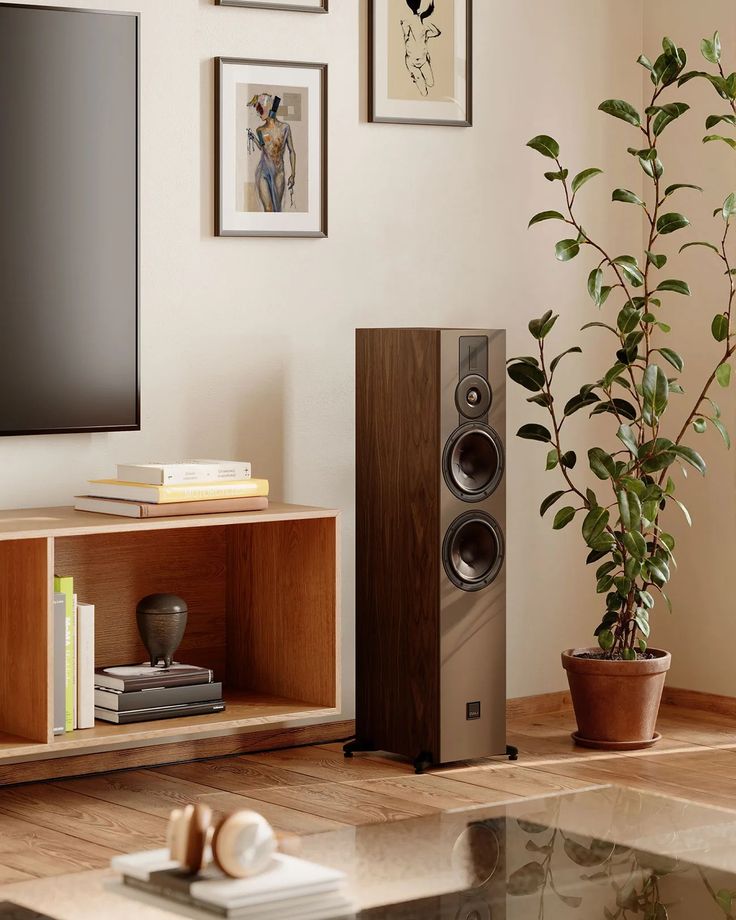
Floorstanding speakers are large speaker systems designed to stand directly on the floor without requiring additional mounting or stands.
They typically feature multiple drivers housed within a tall cabinet.
Common Components
Most floorstanding speakers include:
- Tweeters for high frequencies
- Midrange drivers for vocals
- Woofers for bass reproduction
Some premium models may also include dedicated sub-bass drivers.
Key Characteristics
Large Cabinet Design Floorstanding vs Bookshelf Speakers
Provides greater internal volume.
Powerful Output
Capable of filling large rooms.
Deep Bass Performance
Often eliminates the need for a subwoofer.
Full-Range Sound
Reproduces a broad frequency spectrum.
These characteristics make floorstanding speakers popular among serious audio enthusiasts.
Understanding Bookshelf Speakers
Bookshelf speakers are compact speaker systems designed to fit on shelves, desks, speaker stands, or entertainment centers.
Despite their smaller size, many modern bookshelf speakers deliver impressive audio quality.
Key Characteristics
Compact Form Factor
Suitable for smaller spaces.
Flexible Placement
Easy to position.
Affordable Options
Often less expensive than tower speakers.
Excellent Imaging
Provide detailed sound reproduction.
Bookshelf speakers are highly versatile and widely used in both music and home theater systems.
Sound Quality Comparison
Sound quality is often the primary factor when choosing speakers.
Floorstanding Speakers
Advantages
- Larger soundstage
- Higher volume capability
- More powerful bass response
- Better dynamic range
The larger cabinet allows for deeper and more impactful low frequencies.
Bookshelf Speakers
Advantages
- Detailed midrange performance
- Accurate imaging
- Precise stereo separation
- Balanced sound reproduction
Many audiophiles appreciate the clarity and accuracy of quality bookshelf speakers.
Bass Performance
Bass is one of the biggest differences between these speaker categories.
Floorstanding Speakers
Benefits
- Larger woofers
- Greater cabinet volume
- Deeper low-frequency extension
- Stronger bass impact
Many tower speakers can deliver substantial bass without requiring a dedicated subwoofer.
Bookshelf Speakers
Benefits
- Tight and controlled bass
- Accurate low-frequency reproduction
- Compact design
However, smaller cabinets generally limit deep bass output.
Many users pair bookshelf speakers with a subwoofer for enhanced performance.
Room Size Considerations
Room size plays a major role in speaker selection.
Best Rooms for Floorstanding Speakers
Ideal for:
- Large living rooms
- Dedicated home theaters
- Open-concept spaces
- Listening rooms
Their higher output capability allows them to fill larger spaces effectively.
Best Rooms for Bookshelf Speakers
Ideal for:
- Apartments
- Bedrooms
- Offices
- Small living rooms
Compact dimensions make them easier to integrate into limited spaces.
Space Requirements
Available space often influences purchasing decisions.

Floorstanding Speakers
Considerations
- Require more floor space
- Larger visual presence
- Less placement flexibility
Tower speakers often become focal points within a room.
Bookshelf Speakers
Advantages**
- Space-efficient
- Easy placement
- Minimal room impact
They are particularly useful in environments where space is limited.
Home Theater Applications
Both speaker types perform well in home theater systems.
Floorstanding Speakers for Home Theater
Advantages
- Powerful front-channel performance
- Deep bass reproduction
- Cinematic sound experience
Excellent for movie enthusiasts.
Bookshelf Speakers for Home Theater
Advantages
- Easy integration
- Flexible speaker positioning
- Cost-effective surround systems
When paired with a quality subwoofer, bookshelf speakers can create an outstanding home theater experience.
Music Listening Performance
Music lovers often evaluate speakers based on musical accuracy.
Floorstanding Speakers
Excellent for:
- Rock
- Electronic music
- Orchestral recordings
- Large-scale performances
Their larger drivers provide greater authority and impact.
Bookshelf Speakers
Excellent for:
- Jazz
- Acoustic music
- Vocals
- Classical recordings
Their precision and imaging often appeal to critical listeners.
Speaker Placement Flexibility
Proper placement greatly affects audio performance.
Bookshelf Speakers
Advantages:
- Easy repositioning
- Adaptable layouts
- Suitable for desktop setups
Flexibility is one of their greatest strengths.
Floorstanding Speakers
Advantages:
- Stable positioning
- No additional stands required
However, they generally require more careful room planning.
Amplifier Requirements
Speaker efficiency influences amplification needs.
Floorstanding Speakers
Often require:
- More powerful amplifiers
- Higher current delivery
Particularly true for premium models.
Bookshelf Speakers
Many models perform well with:
- Entry-level amplifiers
- Compact receivers
- Desktop audio systems
This can reduce overall system costs.
Budget Considerations
Budget is often a deciding factor.
Floorstanding Speakers
Generally offer:
- Larger cabinets
- More drivers
- Higher manufacturing costs
As a result, tower speakers are often more expensive.
Bookshelf Speakers
Advantages:
- Lower purchase price
- Reduced shipping costs
- More affordable upgrades
They often provide excellent value for money.
Aesthetic Considerations
Speaker appearance matters in many living spaces.
Floorstanding Speakers
Characteristics
- Bold visual presence
- Premium appearance
- Statement design
They can become a centerpiece of a room.
Bookshelf Speakers
Characteristics
- Discreet appearance
- Minimalist integration
- Easier room blending
Many homeowners prefer their subtle design.
Subwoofer Integration
Subwoofers can significantly affect speaker selection.
Floorstanding Speakers
May not require a subwoofer for casual listening.
Bookshelf Speakers
Often benefit greatly from subwoofer support.
A quality subwoofer can help bookshelf speakers achieve full-range performance.
Wireless and Smart Speaker Options
Modern speakers increasingly offer wireless features.
Examples include:
- Bluetooth connectivity
- Wi-Fi streaming
- Voice assistant support
- Multi-room audio
Both speaker categories are available in active and wireless configurations.
Who Should Choose Floorstanding Speakers?
Floorstanding speakers are ideal for users who:
- Have larger rooms
- Want powerful bass
- Enjoy high-volume listening
- Build dedicated home theaters
- Prefer full-range audio performance
They deliver impressive scale and impact.
Who Should Choose Bookshelf Speakers?
Bookshelf speakers are ideal for users who:
- Have limited space
- Prefer flexibility
- Want excellent value
- Listen in smaller rooms
- Plan to use a subwoofer
They provide exceptional performance in a compact package.
Common Mistakes When Choosing Speakers
Avoid these common errors:
Ignoring Room Size
Speaker size should match the environment.
Focusing Only on Bass
Overall balance matters.
Overlooking Placement Requirements
Proper positioning affects performance.
Neglecting Amplifier Compatibility
Ensure system matching.
Careful planning improves satisfaction.
The Future of Home Audio Speakers
Speaker technology continues advancing rapidly.
Recent innovations include:
Improved Driver Materials
Enhance clarity.
Wireless Streaming
Increase convenience.
Smart Home Integration
Expand functionality.
Advanced Acoustic Engineering
Improve sound quality.
Both floorstanding and bookshelf speakers continue benefiting from technological progress.
Conclusion
The choice between floorstanding and bookshelf speakers ultimately depends on your room size, listening preferences, budget, and audio goals. Floorstanding speakers excel at delivering powerful, full-range sound with deep bass and impressive room-filling performance, making them ideal for larger spaces and dedicated home theaters. Bookshelf speakers offer outstanding clarity, flexibility, affordability, and space efficiency, making them an excellent choice for smaller rooms and versatile listening setups.
Both options can provide exceptional audio experiences when properly matched to your environment and preferences. By carefully considering factors such as room dimensions, bass requirements, placement flexibility, and budget, you can select the speaker solution that best complements your lifestyle and enjoy high-quality sound for years to come.
